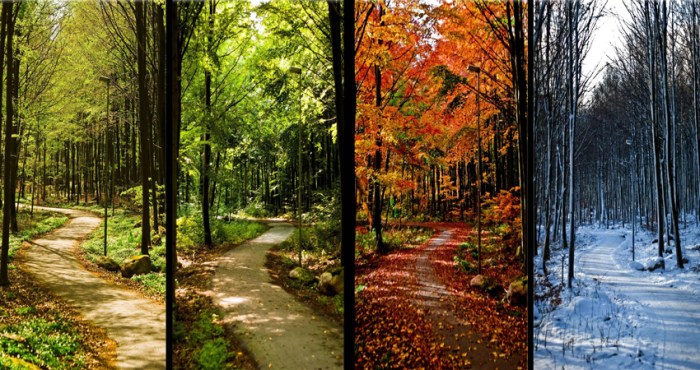
We continue our teaching on spiritual seasons with Autumn and Winter. Also I would like to point out that these examples are more general in nature than exact. Your walk with the Lord is different than mine, and you will view the world you live in differently. My only hope is that these examples will you give a path to start on, in which you can continue your journey with the Holy Spirit and He can give you wisdom on what your spiritual seasons look like.
During spiritual autumn, our spiritual growth will be shrinking back but the demands from us increase.
It is interesting that the greatest harvest of fruit comes when the tree is heading for a season of rest.
-It is incorrect to say that a person in spiritual autumn does not have God’s anointing; God anoints all the spiritual seasons.
-On a personal level, during spiritual autumn you may be feeling a need to return to the basics of the faith, or a new commitment to the spiritual disciplines of fasting, praying, solitude, individual worship and devotion; things which in themselves, seem to produce little fruit but are essential for our Christian walk.
– In ministry, you might have to cut back your commitment. There might be external factors like time commitments due to family, work, etc.
-Winter. Spiritual winter is the most uncomfortable time for many Christians, especially in the western church.
– In our western society, we tend to value people based on how much they produce. If you don’t believe me, look at who gets recognized in the western church. Usually it is the people that seem to live at church and are committed to many different activities. This work=value culture is not Godly and it is wrong to applaud people who are over committed as much as it is wrong to applaud people who are under committed. God values people, not works and we should to… but that is another discussion.
-Spiritual winter is like the Sabbath. Let’s talk about Sabbath rest. It is not doing nothing. It’s not taking a break from God. During the Sabbath, God instructed people to keep the rest holy to God and reflect on the things that God had done for them. God says in Lev 23:27 we must “deny” (NIV, NASB) or “afflict” (KJ, NKJ) ourselves when observing the Sabbath. What would be denied?
-Whatever keeps our minds from reflecting on God’s good deeds and keeping holy attitude before God are the exact things that we must deny.
-They might include watching TV or reading that novel. They could include sports or shopping. They might even include catching another bible study or getting involved with another ministry. We need to discipline ourselves to stay connected with God during our rest because our natural inclination is to wander spiritually when we are in a season of rest.
-During spiritual winter, it is normal to feel like God is not hearing our prayers or speaking to us. We may feel like we are having a “wilderness” experience.
-We may feel like our ministry is unfruitful and assume it is dying. But during winter, there is no fruit bearing and it is a time or spiritual rest.
-In winter, reflect on God and God’s faithfulness to you and maintain an attitude of reverence before God. It is God’s perfect order that all creation rests periodically.
-God thinks so highly of rest that on the seventh day of creation, He rested too.
-When we don’t rest, we’ve made our service an idol above God. When we squirm away from spiritual winter, we squirm away from Godliness.
Spiritual seasons are not spiritual conditions of the saint nor a way of measuring Godliness.
God ordains spiritual seasons to provide the greatest spiritual fruit bearing and the greatest spiritual growth.
-God’s seasonal plan includes periods of growth and periods of rest. Recognizing the season you’re in and responding appropriately to that season, is the best way to insure continued spiritual growth and a life that bears Godly fruit.
Also spiritual seasons apply to a congregation as well as the individual. Knowing what season our congregation is can really help in understanding how we should direct our worship and praise in song and prayer.






 Whirlwind of Hope